
I’m pretty impatient when it comes to technology and I’ve often wondered just how much of my time is being wasted while I’m waiting for something to load, or download, or for tasks to complete. Memory expert Crucial.com has done a spot of surveying and discovered that slow tech is responsible for wasting billions of hours every year.
The company surveyed 1,148 Brits, aged 16-65, and found the average person wastes over 39 hours each year (or 6.5 minutes a day) waiting for slow technology to complete everyday tasks. It also found some people wasted as many as 121 hours a year. For the whole of the UK, this equates to a whopping 2.1 billion hours of wasted time per annum.
35 percent of respondents were frustrated by tech running slowly, while 31 percent were annoyed by the length of time their devices took to start.
For fun, Crucial has come up with a list of the top things people would have preferred to have done with this wasted time. Suggestions include.
| Watch TV/a movie | 42% |
| Take a nap | 33% |
| Cook a family meal | 26% |
| Spend more time with children | 24% |
| Go to the gym | 20% |
| Catch up on work | 18% |
| Read my child a bedtime story | 15% |
| Go for dinner/drinks with friends | 15% |
| Go on a date with my partner | 13% |
Roddy McLean, a computer upgrade expert from Crucial.com, said: "Families and couples today have such busy schedules and often find it difficult to make time for each other, without everyday annoyances such as slow-running technology adding to this problem".
There's an infographic detailing the perception vs the reality of our modern tech-life balance below.
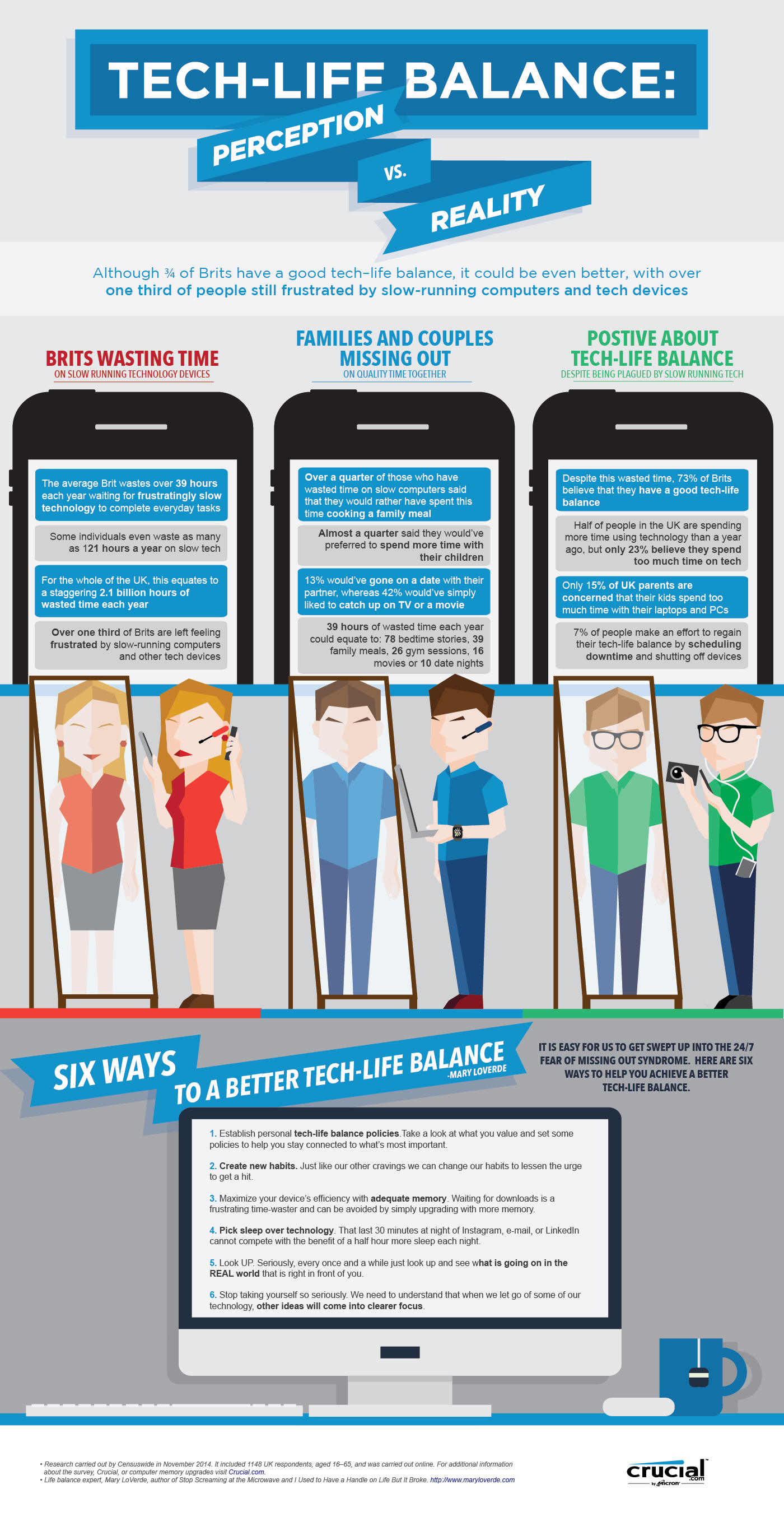
Photo credit: Dan Kosmayer/Shutterstock
from BetaNews http://feeds.betanews.com/~r/bn/~3/4pgCSqib7nA/
via IFTTT







 Сообщения


1 коммент.:
The stats in this piece are pretty eye-opening, especially the part about the average person wasting over 39 hours a year just waiting for slow technology. I think many of us can easily relate to that 31% who get annoyed just by how long a device takes to start up. When you're in the middle of a busy workday, six minutes of "spinning wheels" feels like an eternity.
In my line of work, we deal with large-scale network chassis and fabric modules, where "slow tech" isn't just a personal annoyance—it can be a massive bottleneck for an entire office. I've spent many hours sitting in a cold server room waiting for a supervisor engine to sync or a core chassis to reboot after a firmware update. It's funny because we obsess over micro-latencies in the network fabric, yet we often overlook the cumulative "human latency" we experience just getting our own workstations to behave. If we applied the same performance standards to our laptops that we do to our core network backbone, we'd probably all be a lot less stressed.
I wonder, though, as our hardware gets faster, do we actually gain free time, or do we just fill that saved time with even more digital tasks?
Отправить комментарий