Simple Issues Bank Startup Mondo Cease And Desist Over Alleged Use Of “Safe To Spend” Trademark

Simple, the U.S. banking startup now owned by BBVA after it was acquired in early 2014, seems to have forgotten what it’s like to be a fledgling upstart already.

The company’s lawyers have sent yet-to-launch U.K. bank Mondo a ‘cease and desist’ over its alleged infringement of the trademark “safe to spend” after the phrase was spotted being used in a prototype of Mondo’s app in screenshots shared on Twitter and subsequently published in an article by TechCrunch.

In the letter (embedded below), Cowan, Liebowitz & Latman, representing Simple Finance Technology Corp, instruct Mondo to cease using the phrase “SAFE-TO-SPEND”, for which Simple successfully trademarked in the European Union as of April 21st in connection with its online banking business.

The letter also alleges that Mondo is using the mark “SAFE TO SPEND” in connection with “virtually identical goods and services”, and references attached screenshots of TechCrunch’s article (sorry Mondo!) regardless of the fact that those screenshots originally showed up on Twitter.

MondoNow, of course, Simple has every right to defend its own trademarks — though who would have thought the fairly generic phrase “safe to spend” could be trademarked — and in fact to some degree it’s obliged to do so in order to retain those trademarks. However, in this instance the issuing of a ‘cease and desist’ seems overly aggressive and bizarrely premature.

Mondo isn’t publicly launched and has yet to even secure a U.K. banking license, which, as we reported, it needs in order to fulfil ambitious plans to become a “full stack” bank in its own right, not just a mobile app existing on top of an existing bank’s license and infrastructure, as is the case with most banking startups.

A simple note from Simple to Mondo’s founders alerting them to the EU trademark and suggesting they do not use the phrase going forward would surely have sufficed, rather than instructing lawyers on its behalf. But, hey, this is the litigous world we now live in.

I’ve contacted Simple to ask for comment and will update this post should or when I hear back.


from TechCrunch http://feedproxy.google.com/~r/Techcrunch/~3/LbiWMqNGBk0/
via IFTTT

Seacrest Out: The Typo iPhone Keyboard Is Dead

BlackBerry has successfully ended the short but dazzling life of Typo, the hardware keyboard for iPhone spearheaded by longtime BlackBerry user and iPhone switcher Ryan Seacrest. In a short press release announcing a settlement, BlackBerry notes that according to the terms of the agreement between itself and Typo, the latter company will stop selling any kind of keyboard for devices with a screen size smaller than 7.9 inches.

That means theoretically, a future Typo keyboard accessory could adapt to fit a huge iPhone 8 Plus Plus or something if Apple goes crazy, but for now it’s curtains for those wanting to have their modern smartphone software ecosystem and type on it, too.


from TechCrunch http://feedproxy.google.com/~r/Techcrunch/~3/EIz5yg2A2Kk/
via IFTTT

Morpholio’s Crit Makes Marking Up Designs Faster Than Ever

Crit (as in Critique) is a new iPhone and iPad app by Morpholio that allows designers, architects, photographers and other creative types to upload and markup images as a form of real-time communication.

For example, a junior photographer could upload images they just shot into the app and send them to a creative director who could then mark up the images (with finger-drawn sketches) to communicate changes that should take place in the photo.

Crit was originally a smaller, internal function of parent company Morpholio’s suite of services. This new version breaks it out into its own app and also adds much of the drawing functionality and advanced commenting features that the old version lacked.

Crit

I took a quick demo with Morpholio team members last night and, as an ex-designer, I can see some of the utility here. The UI is clean and fairly intuitive and it works as advertised. The iPad version would be most useful for sustained design critiques, but the iPhone would work in a pinch or while traveling too — it’s nice to have choices.

From a sheer productivity standpoint, scheduling meetings with busy art directors or creative directors to review design concepts can be quite difficult. A tool like this—that mobilizes that interaction—could keep projects in motion instead of stuck in limbo. You might be able to get the directional answers you need for a design project, in real-time from this sort of interaction.

A stylus was helpful for doing markup, but I wonder how well complex web designs or precise blueprints or wireframes would fare in this tool?

Still, even imprecise markup couldn’t be worse than a project languishing while waiting for approvals or comments, so I think this is sort of interesting from that standpoint. A legit design markup tool.


from TechCrunch http://feedproxy.google.com/~r/Techcrunch/~3/3NJcngT2_BY/
via IFTTT

Foursquare, Via Button, Now Lets You Order An Uber Directly In The App

Foursquare and Uber are teaming up, with the help of mobile deep-linking startup Button, to offer Foursquare users a button within the app to call an Uber.

The idea is that, as you look up restaurants or fun destinations on the Foursquare app, you could also execute on that plan far more easily with a button directly inside the app.

For users without the Uber app installed, a discount will be provided on your first ride (promo code “FOURSQUARE”) as well as a prompt to download the app. For folks who have been Ubering for years now, you’ll simply be given the option to choose your car type (Uber X, Black, SUV, etc.) and their work is then complete.

Button’s DeepLink Commerce platform was built to unify the dozens (and sometimes hundreds) of apps you use on your smartphone. Almost every experience is fragmented across your screen — even Foursquare dumped the check-in into Swarm and left recommendations in the main app.

So it makes sense that Button wants to use its technology to gauge customer intent and facilitate the connections that already exist among various apps in a way that provides value to the user.

  1. Screenshot 2015-06-01 08.24.56

  2. Screenshot 2015-06-01 08.25.07

  3. Screenshot 2015-06-01 08.25.19

  4. Screenshot 2015-06-01 08.25.56

Uber has recently opened up its API to allow other apps to integrate with it, but Button provides a faster and simpler way for app makers to tie in with other apps.

Button takes a revenue share of every transaction made through the DeepLink Commerce platform, and this launch marks Button’s foray on the Android platform.

Button has raised a total of $14.3 million in funding since launch.


from TechCrunch http://feedproxy.google.com/~r/Techcrunch/~3/CjbFHJzRB4w/
via IFTTT

Nintendo NX Dedicated Gaming System Could Run Android

Android-powered gaming systems are not the weird outlier they once where, with Nvidia shipping multiple devices that fit that general description. News from Japan’s Nikkei business news outlet now suggests Nintendo might field a device in that category, in the form of the upcoming Nintendo NX gaming system.

The NX is still an enigma wrapped in a mystery, after first being revealed as a project currently in progress at Nintendo back in March when mentioned by Nintendo CEO Satoru Iwata. It appeared in a slide, making up one half of the targets for Nintendo’s new cross-platform membership service that will span both general purpose devices like smartphones and tablets, and dedicated consoles like the 3DS, Wii U, and the “NX.”

NX still apparently firmly occupies that dedicated console territory, however, so it’s not likely it’ll look like Nvidia’s solutions, which are all essentially general-purpose Android devices with some extra power, games optimized specifically for the hardware and a built-in launcher. It’s more likely Nintendo will do some more advanced modification of Android, giving them an easy way to get smooth performance and better support for media apps, along with developer tools that mobile game devs already understanding, while locking down the majority of the OS to keep things focused.

Nintendo is working with DeNA to bring its signature characters and properties to mobile devices, including iPhone and Android, already, but the NX sounds like it’ll be more than just a Nintendo-owned hardware platform upon which those can appear. But it should make it easier for devs to target across devices, and it might make for a decent user interface on a Nintendo console for once.

via IGN


from TechCrunch http://feedproxy.google.com/~r/Techcrunch/~3/ek583t9jLlo/
via IFTTT

U.K. Police Making One Comms Data Request Every Two Minutes — Report

U.K. civil rights group Big Brother Watch has obtained data revealing the extent of domestic police forces’ access to web users’ communications data.

In a report published today the organisation says U.K. police forces made more than 733,000 requests for comms data over a three year period (between 2012 and 2014) — which is says is the equivalent of one request being made every two minutes.

On average, 96 per cent of requests were internally approved — so just four per cent of all requests were declined. The report is based on data Big Brother Watch obtained by making Freedom of Information requests to U.K. police forces.

The type of comms data police forces are accessing typically refers to metadata such as sender and recipient details for text messages, emails, phone calls. However Big Brother Watch says it can also include a person’s location, via the GPS on their mobile phone or IP address of their home computer; websites visited; web searches undertaken; and the method of communications used.

The organization notes wider criticisms that the expansive umbrella of metadata has itself become deeply intrusive — even before the new U.K. government’s push to expand state surveillance capabilities, via a forthcoming Investigatory Powers Bill that aims to sanction capturing the content of communications too, is taken into account.

A key argument being made by the government to justify new legislation is a so-called “capability gap” for digital data capture. But Big Brother Watch says its report shows the vast majority of requests made by police forces are approved — “potentially giving law enforcement access to a vast amount of information” — which it argues casts doubt on Home Office claims of a lack of data being the problem.

It argues greater transparency is needed to ensure an informed debate ahead of any new state surveillance powers, noting:

Currently, if the public want to know about how their communications can be accessed by law enforcement, their only source of information is from the transparency reports published by a handful of technology companies. It is unacceptable that law enforcement agencies that access and use our personal data are so lacking in transparency and are so reluctant to express the purpose and process of this element of policing.

A statistical analysis of how often these powers are requested, how often they are refused and how effective they are when used, would assist in increasing public understanding of why Communications Data plays a crucial role in 21st century policing.

As well as supporting calls for new definitions of comms data, to better reflect differing levels of intrusiveness, the organization argues that judicial approval should be a required last step in any request for comms data:

Currently the system culminates with the sign-off from an internal Single Point of Contact (SPoC). Whilst law enforcement have worked hard at promoting the benefit of the internal SPoC system, based on the findings of our report and the sheer volume of communications data requests approved, we believe that a further independent level of approval is necessary to ensure that a standardised procedure exists across all police forces.

This system would ensure an independent assessment of the necessity and proportionality of the request. It would act as an extra safeguard. Should a problem occur during an investigation external approval will be of benefit in ensuring that independence was maintained whenever a request for personal data was made.

Other changes it is calling for are a requirement that police forces publish transparency reports detailing how requests are approved, the number of individuals affected and the type of crime comms data is used for.

It also wants to see a “clear, standardised procedure” for access to comms data, and proof that data that’s more than six months old is regularly used “in order to establish a proportionate approach to data retention”.

Only one U.K. police force, Humberside, provided Big Brother Watch with a breakdown (below) of the offense categories attached to its comms data requests.

The crime category generating the most requests between 2009 and 2012 for this police force was drugs. Categories generating the least requests include auto crime, criminal damage and rape.

Big Brother Watch report


from TechCrunch http://feedproxy.google.com/~r/Techcrunch/~3/E-dsZqLCLho/
via IFTTT

Windows 10 Is Available July 29

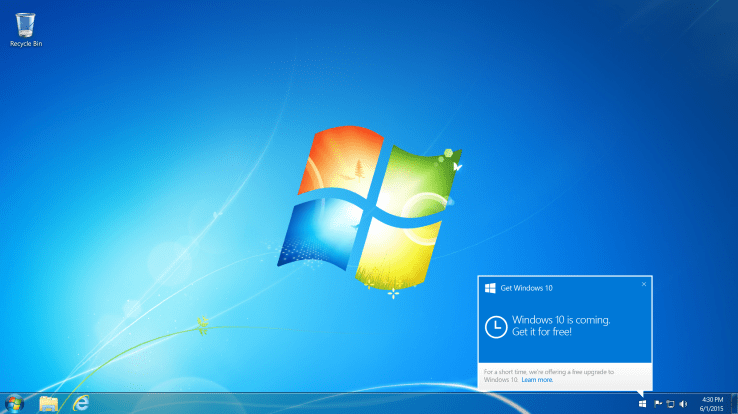
Microsoft kicked off June with news that Windows 10 will ship on July 29, just a little under two months from now. The next big update for MS is designed as a unifying platform that will offer continuity across mobile, desktop, tablets and even the Xbox One gaming console, and it will be a free upgrade for Windows 7 and 8 users for the first year. To help ensure easy updates (and probably as a way to try to get a large installed base os Windows 10 users right away), Microsoft is also using a “reservation” system that allows users to sign up to be notified when the update is available, and to schedule it to install when you want.

A big new feature addition for Windows 10 is Siri, so here’s a message the company prepared from its virtual assistant ant announcing the news.

What else do you get? Well I’m glad you asked – here’s a quick look at the highlights:

  • Microsoft Edge: The successor to Internet Explorer, designed around minimalism and collaboration tools, plus with Cortana integration.
  • Word, Excel and PowerPoint built in.
  • Xbox Live and Xbox app for doing things like recording gameplay, interacting with your Xbox friends and also streaming Xbox games to the desktop.
  • Windows Continuum, which lets you smoothly jump between multiple Windows 10 devices, and which lets you use your phones like a PC with external input accessories.
  • Windows Hello, a new login method that uses face, iris or fingerprint recognition to log you in without a password, depending on hardware support.

Microsoft is doing everything it can to make the transition smooth, like ensuring it’ll work with your existing applications. Windows 8 was sort of an awkward generation, so here’s hoping the skipped numeral results in something that suits everyone’s needs.


from TechCrunch http://feedproxy.google.com/~r/Techcrunch/~3/EqEc1JU1UD8/
via IFTTT