Smartphones hit 7 inches as Huawei announces MediaPad X2

Smartphones hit 7 inches as Huawei announces MediaPad X2


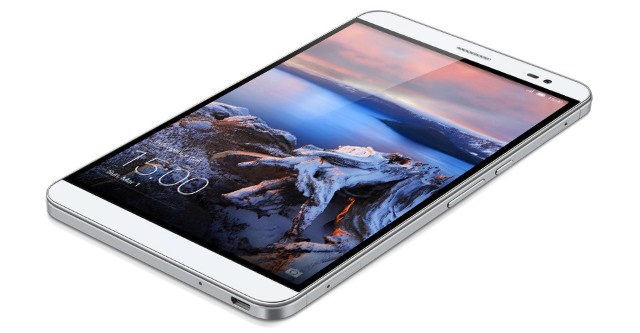
The announcements are coming thick and fast from MWC 2015 in Barcelona. As well as the Huawei Watch, Huawei also announced the MediaPad X2. As you might guess from the name, this is a tablet, but dual SIM support means that it is essentially a gigantic smartphone with no less than 7 inches of screen to play with.


And it's more than just the dimensions that are supersized -- the 2.0 GHz Kirin930 64 bit octa-core packs quite a punch. Being a brand new device, it's little surprise that Android 5.0 Lollipop is found pre-installed, and this is supplemented by the third version of Huawei's own Emotion UI. But there is much more to this phone/tablet crossover -- perhaps the first device to genuinely justify the horrific portmanteau phablet.


This is a device that very clearly tries to bridge the gap between tablets and smartphones, and the 323ppi, 1920 x 1200 lends itself to all manner of tasks. Two versions are on the card; one features 2GB RAM and 16GB of storage, the other 3GB RAM and 32GB. Both feature a MicroSD slot that can handle a memory card up to 128GB.


Just 7.18mm thick and weighing at 239g, this is a tablet that could be easily carried around with little trouble, and the hefty 5000 mAh battery means you can last for some time between charges. Huawei is yet to reveal details of pricing and availability, but we do have the full specs to tide us over:


  • Height: 183.5mm

  • Width: 103.9mm

  • Depth: 7.18mm

  • Weight: About 239g

  • Color: Silver, Gold

  • Display: 7-inch 1920 x 1200 FHD IPS LTPS touch display, 10-point capacitive touch screen, 323ppi, 450 nits

  • CPU: 2.0 GHz Kirin930 64 bit octa-core CPU, 4 x 2.0 GHz+4 x 1.5 GHz, GPU Mali-T628+ i3 co- processor

  • Operation System: Android 5.0, Huawei Emotion UI 3.0

  • Memory: RAM: 2GB/ 3GB, ROM: 16GB/ 32GB, MicroSD 128GB

  • Network: LTE Cat6: up to 300 Mbps DL / 50 Mbps UL, DC-HSDPA+: up to 42 Mbps DL / 5.76 Mbps UL, Dual 4G SIM connectivity, Dual-antenna Wi-Fi: 802.11a/b/g/n, 2.4/5GHz, Bluetooth: 4.0 (compatible with 3.0 2.1 + A2D, EDR, BLE), MicroUSB 2.0, Cellular Voice, SMS and MMS, AirSharing, Wi-Fi hotspot

  • GPS: GPS/A-GPS Location & Navigation

  • Connectivity: Model: GEM-702L - GSM: band 2/3/5/8, UMTS: band 1/2/5/8, TD-SCDMA: band 34/39, LTE-TDD: band 38/39/40/41, LTE-FDD: band 1/3/7/8/28, Wi-Fi: 2.4 GHz/5GHz, Model: GEM-703L - GSM: band 2/3/5/8, UMTS: band 1/2/5/8, TD-SCDMA: band 34/39, LTE-TDD: band 38/39/40/41, LTE-FDD: band 1/3/7, Wi-Fi: 2.4/5 GHz

  • Sensors: Ambient Light Sensor, Accelerometer, Proximity sensor, Gyroscope, Compass

  • Camera: 13-megapixel BSI rear-facing camera, 5-megapixel front-facing camera

  • Audio: Dual built-in noise reduction MIC, Receiver and Speaker, DTS sound technology, 3.5 mm stereo headset jack

  • Audio formats: MP3/WMA/FLAC/APE/WAV/RA/Ogg/MIDI/3GP

  • Video: 1080p full HD video recording and video playback

  • Video formats: MPEG-4, 3GP, 3G2, RM, RMVB, ASF, FLAC, APE, MOV

  • Battery: 5000 mAh lithium polymer, about 24 days of standby time, about 3.5 hours of charging time, reverse charge function


from BetaNews http://feeds.betanews.com/~r/bn/~3/X_bw2VKZEuY/

via IFTTT

Huawei Watch could be the first smartwatch you actually want to wear

Huawei Watch could be the first smartwatch you actually want to wear


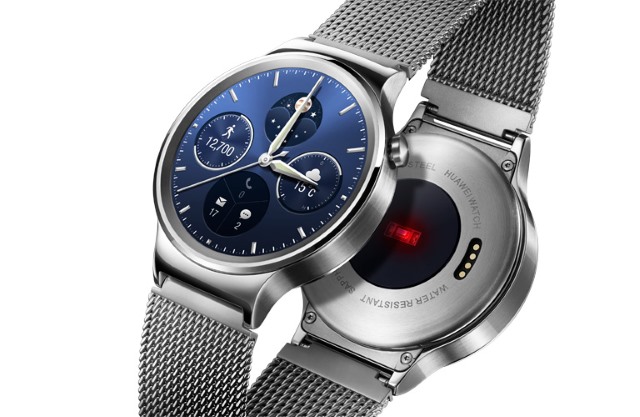
At MWC 2015, Chinese manufacturer Huawei announced its first foray into Android Wear. The company unveiled the rather predictably-named Huawei Watch today, and it's already got tongues wagging around the world. The screen is a 1.4 inch, 400 x 400 pixel AMOLED affair which is, importantly, completely round.


Packing 286 pixels per inch, the Sapphire crystal screen has a higher resolution than the Watch Urbane launched by LG today. The stainless steel case gives the watch a quality look and feel, and the device boasts a bevy of on-board sensors for tracking different activities. What is likely to prove the Huawei Watch's key to success, however, is the fact that it so closely resembles the look of a regular watch.


It's difficult to believe that this is the first smartwatch Huawei has released -- it's seriously sexy, so it seems that biding time has worked in the company's favor. Borrowing from traditional watch design, the Huawei Watch features a crown that can be used to access the app launcher. This can also be accessed by swiping to the left on the screen, while a right swipe calls up a list of frequently used contacts. Customization is a key feature of the watch. There's a choice of black, gold and silver cases, stainless steel and leather straps, and more than 40 built in watch faces so you can create something perfect for you.


In terms of specs, you'll find 4GB of built-in storage, 512MB of RAM and a Qualcomm 1.2GHz processor. There's also a 6-axis gyroscope, a barometer, and a heart rate monitor, while charging is taken care of by a magnetic cradle. It does not matter what Android phone you have, as the Huawei Watch can pair with any one over Bluetooth.


There's no word on pricing at the moment, but here are the full spec to mull over until we have more details:


Size: 42mm diameter by 11.3mm thickness


Color: Silver, Black, Gold


Display: 1.4-inch full circle AMOLED display 400x400, 286ppi Sapphire crystal


Material: 316L Stainless Steel


CPU: Qualcomm APQ8026 1.2GHz


Operation System: Android Wear


Memory: 512MB RAM + 4GB ROM


Network: Bluetooth 4.0/4.1


Sensors: Gyroscope + Accelerometer, PPG, Barometer, Vibration Motor


Audio: Built-in MIC


Battery: 300mAh


from BetaNews http://feeds.betanews.com/~r/bn/~3/M_iZmsk0DFc/

via IFTTT

This Tesla Model S Easter Egg Lets You Be James Bond

submersible


The Tesla Model S is one helluva car – but it can’t do everything. It can’t recharge as fast as you could fill a tank of gas. It can’t go over 155 miles per hour. Oh, and it can’t transform into a submarine and cruise around underwater.


With this awesome little easter egg, though, that last one becomes a bit less certain…


You see, Elon Musk is a bit of a James Bond fan.


Specifically, he’s a fan of Bond’s submersible Lotus Esprit from 1977’s The Spy Who Loved Me — so much so, in fact, that he dropped nearly a million dollars in an auction for the movie prop. His eventual goal? To convert the prop (which, sadly, doesn’t do much besides look cool) into an actual, functional submersible vehicle.


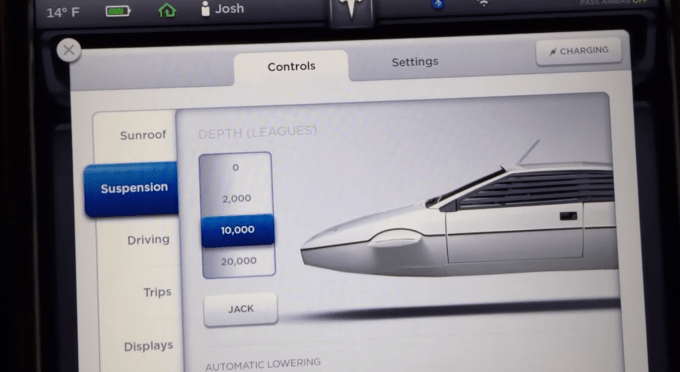
In a nod to this, Tesla engineers have hidden a most excellent easter egg within the Model S’ 17-inch touchscreen. Check it out:


Note that there’s a Jules Verne nod in there, too, with one of the “Depth” options being “20,000 leagues” — as in 20,000 Leagues Under The Sea.


For comparison’s sake, here’s what that screen usually looks like:


suspension


And here’s the Bond scene that inspired it all:


(Note: This doesn’t actually make the Model S a submersible, so please don’t drive that $80,000 car into the ocean. Also, anti-aircraft missiles are not included.)


[via Jalopnik]


from TechCrunch http://feedproxy.google.com/~r/Techcrunch/~3/2-llm9pWlu4/

via IFTTT

Samsung announces Galaxy S6, S6 Edge and Samsung Pay at MWC 2015

s6edge23


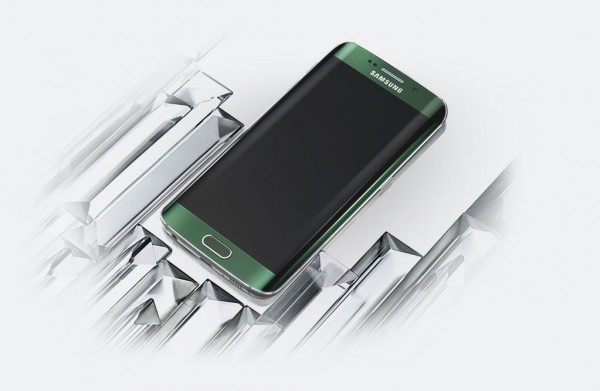
Mobile World Conference 2015 is here, and the news is coming fast and furious. The most anticipated announcement, however, has been Samsung's Galaxy S6. As expected, the smartphone is here, but so is its more beautiful sibling, the S6 Edge. Potentially more important though, is Samsung Pay -- a mobile payment system to rival Apple Pay and Google Wallet.


Unfortunately for Samsung, pundits and analysts have been talking all doom and gloom for the company, something else Apple has had to face. Much like Apple, the analysts are dead-wrong to count out Samsung in the mobile market. Quite frankly, the Android market is the Samsung market -- no other brand of smartphone is more ubiquitous in public. So are these announcements enough? Are they enough to finally make the doom and gloom pundits zip their lips?


"Carefully crafted from metal and glass, the Galaxy S6 and Galaxy S6 edge blend purposeful design with powerful features. The Galaxy S6 edge, particularly, shows unique and outstanding beauty while also providing a solid grip and an immersive viewing experience with the world’s first curved display on both sides. Its glass body, made from the toughest glass to date, Corning Gorilla Glass 4, is available in an array of colorful jewel tones, including White Pearl, Black Sapphire, Gold Platinum, Blue Topaz and Green Emerald, which elicit a unique visual texture as it reflects natural light. This timeless design required first-of-its-kind glass crafting technology and unmatched quality control, setting the Galaxy S6 and Galaxy S6 edge apart from every other mobile device on the market. The premium device aesthetics deliver true value and are complemented by a totally new and lighter interface that greatly enhances usability and functionality. A refined and fully optimized user experience simplifies applications and offers features and settings in a more intuitive way", says Samsung.


The manufacturer further explains, "the thin and lightweight Galaxy S6 and Galaxy S6 edge integrate the most advanced, cutting-edge, Samsung core technology available today. The world's first 14nm mobile processor with 64-bit platform, new LPDDR4 memory system and UFS 2.0 flash memory provides higher performance and enhanced memory speed with lower power consumption. Moreover, the world’s first 1440P/VP9 hardware based codec enables users to enjoy high resolution streaming video while also using less power. In addition, the 5.1-inch Quad HD Super AMOLED screen offers users the highest pixel density of 577ppi. Enhanced outdoor visibility with a brighter display (600cd/mm) lets consumers experience content without compromise -- anywhere, at any time".


While pricing and availability are not yet known, below are some notable specs.


  • Display (S6): 5.1 inch Quad HD(2560x1440) 577ppi, Super AMOLED

  • Display (S6 Edge): 5.1inch Quad HD(2560x1440) 577ppi, Super AMOLED, Dual edge

  • Processor: Quad 2.1GHz + Quad 1.5Ghz, Octacore application processor

  • OS Android 5.0 (Lollipop)

  • Camera 16MP OIS(rear), 5MP (front)

  • Connectivity: WiFi: 802.11 a/b/g/n/ac (2.4/5GHz), HT80 MIMO(2x2) 620Mbps, Dual-band, Wi-Fi Direct, Mobile hotspot, Bluetooth: v4.1, A2DP, LE, apt-X, ANT+

  • RAM: 3GB, LPDDR4

  • Internal Memory: 32/64/128GB, UFS 2.0

  • Wireless Charging: WPC1.1(4.6W Output) & PMA 1.0(4.2W) compatible

  • Dimensions (S6):143.4 x 70.5 x 6.8mm, 138g

  • Dimensions (S6 Edge):142.1 x 70.1 x 7.0mm, 132g

  • Battery (S6): 2,550mAh

  • Battery (S6 Edge) 2,600mAh


Unfortunately, there are two aspects of these phones that the Galaxy S fans will consider huge disappointments -- gone are removable batteries and microSD card slots. In other words, you need to pick the size you need when purchasing. Luckily, unlike Apple there is no laughable 16GB version to be found, as it is offered in 32, 64, and 128GB of storage. Obviously, most tech nerds, including myself, will want the 128GB model.

EdgeVsReg


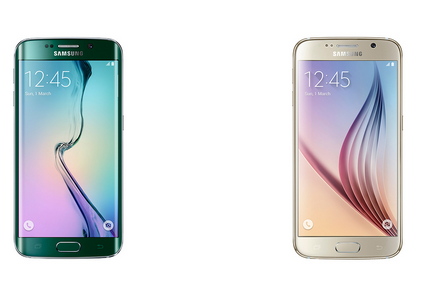
While both the S6 and S6 Edge are beautiful, the Edge is clearly the more attractive option, so I wish Samsung would have only offered it as the "S6". With that said, giving consumer choice is not a bad thing, but it can sometimes confuse shoppers.


Both models come in multiple colors, which are, according to Samsung, "White Pearl, Black Sapphire, Gold Platinum, Blue Topaz (Galaxy S6 only) and Green Emerald (Galaxy S6 edge only)". Maybe I'm alone here, but Green Emerald is my favorite of the bunch, making the phone stand out among the typical smartphone colors. Hopefully an Emerald Green S6 Edge 128GB is in my future!


While Touchwiz will be on board, there is a far more important software solution included too -- Samsung Pay. This is to compete with Apple Pay and Google Wallet, obviously, but will consumers take notice?


"Samsung Pay has the potential of being accepted at approximately 30 million merchant locations worldwide, making it the only mobile payment solution with near universal acceptance. Samsung offers this capability by deploying a groundbreaking technology called Magnetic Secure Transmission (MST). Consumers can use Samsung Pay in merchant locations regardless of whether the terminals support NFC or traditional magstripe, which is the vast majority of existing terminals".


This new technology comes from Samsung's acquisition of LoopPay. How does MST work? According to the LoopPay website, "MST technology generates changing magnetic fields over a very short period of time. This is accomplished by putting alternating current through an inductive loop, which can then be received by the magnetic read head of the credit card reader. The signal received from Loop emulates the same magnetic field change as a mag stripe card when swiped across the same read head. Loop works within a 3-inch distance from the read head. The field dissipates rapidly beyond that point, and only exists during a transmission initiated by the user".


This is a game changer, as Samsung Pay will work in places where Apple and Google's solutions cannot. Until merchants switch entirely to NFC-styled transactions, MST is a great stop-gap.


Which model do you prefer, the Samsung Galaxy S6 or S6 Edge? Tell me in the comments.


from BetaNews http://feeds.betanews.com/~r/bn/~3/oKz397UY7KI/

via IFTTT
The Story Behind Samsung’s Galaxy S6 And S6 Edge Design Departure

Samsung To Offer An Oculus-Powered Gear VR For Galaxy S6 And S6 Edge


Samsung continues investing in the future of mobile virtual reality, with a brand new version of Gear VR designed specifically to work with the new Galaxy S6 and S6 edge smartphones. The Gear VR still carries the ‘Innovator Edition’ tag that means it’s aimed primarily at bleeding edge tech enthusiasts and developers than the general public, and it continues to use Oculus technology to power the software and VR mechanics, but it’s designed to work specifically with the Galaxy S6’s new ultra-high resolution 577 ppi 5.1-inch Quad HD display.


The denser display means users will get reduced pixelation on this iteration of Gear VR, Samsung says, and longer usage time thanks to battery improvements. It’s also much smaller than the Gear VR set designed for the Note 4, with an overall 15 percent reduction (196mm x 107.9 mm x 82.9 mm to be exact) for the newest headset. Samsung’s new 14nm Exynos Octacore also offers better computing capabilities for powering VR experiences, and it now supports power in via its USB port ofor longer use sessions.


Prior to this launch, we speculated about whether Samsung would do something to make the existing Gear VR compatible with its new flagship, or whether they’d do something dedicated, and it looks like we have our answer. It’s still not a genuine, general use consumer VR headset, but it’s another step along that path, and one that should power a lot more interesting feedback, given the larger likely user pool of Galaxy S6 buyers, vs. Note 4 purchasers.


from TechCrunch http://feedproxy.google.com/~r/Techcrunch/~3/cGT2A76tSHo/

via IFTTT

Samsung Pay Takes On Apple Pay This Summer With LoopPay’s MST Tech


Samsung has a new mobile payment solution it announced today, though it will require a few more months before it arrives on the new Galaxy S6 and S6 edge smartphones this summer. It’s called Samsung Pay, and it uses the magnetic secure transmission (MST) tech that Samsung acquired via its purchase of LoopPay last month, which means the vast majority of U.S. retailers should be able to accept it without any change to their existing hardware or infrastructure.


The Samsung Pay service will also use NFC, meaning it should work with the kinds of terminals required by retailers to offer Apple Pay, but the MST tech means that it can talk even to old-school credit card swipe readers, via tech developed by the Kickstarted Boston-based startup LoopPay, which Samsung acquired in total after a partnership begun near the debut of their crowdfunding campaign.


Samsung also has deals in place with MasterCard and Visa on the payment provider side, and is working on arrangements with American Express, Bank of America, Citi, JPMorgan Chase, U.S. Bank and others. Based on its ability to work with existing magstripe terminals, Samsung estimates that it could reach up to 30 million merchants worldwide, so long as the payment providers all come on board.


In practice, it’ll work by being integrated into Samsung devices at the system level, letting users add their own existing cards, and then working via a swipe up from the bezel, which launches the Samsung Pay app and lets them choose their payment card option. Then they use the new finger print sensor to authenticate the transaction (which, thanks to the new touch-based fingerprint reader on the GS6, seems clearly borrowed from Apple Pay) and then tap the merchant terminal to complete. It requires a few more steps than Apple Pay, which automatically launches payment and chooses your default card when you’re in proximity of an active terminal, meaning the fingerprint authentication is the only step required by a user.


Samsung Pay’s ability to work with legacy infrastructure should help it maximize its potential reach, however, which means it could have an easier time convincing merchants, leaving it to focus its attention on educating and motivating users about adopting the behavior.


On the security side, Samsung is using KNOX and ARM’s TrustZone data isolation tech for processors to keep payment card information safe, and Samsung Pay uses tokenization to add an additional layer of security on top of standard magnetic card swipes. It’s aiming for a summer launch, with U.S. and Korea pegged as the launch countries, with expansion to Europe and China planned after that.


from TechCrunch http://feedproxy.google.com/~r/Techcrunch/~3/6Hy8y6ej7qU/

via IFTTT