PiJuice Adds Power To Your Pirojects


If you’ve ever used a Raspberry Pi you’ll notice that it’s great until you need to unplug it. While you can add a battery (the PiPhone had one), it’s not quite as easy as all that. Now, however, you can simply plug in the PiJuice and power your Pi on the fly.


The PiJuice is a “hat” that fits on top of the Raspberry Pi and includes a 1400 mAh battery, integrated real time clock, and an onboard on/off switch. You can even sleep and wake and the Pi based on events. If you don’t know why this doesn’t sound amazing you probably have never wanted to build a portable wireless cat-food dispenser controller or a mobile Raspberry-Pi-powered rocket launching rig.


The PiJuice can be had for about $30 on Kickstarter and should ship in May. For those of you working on a robotic bird feeder/treadmill the PiJuice also comes in a solar version with a panel built right in to charge the battery.


Created by Pi-fans Aaron Shaw and Harry Gee the project essentially takes the Pi off of your desk and into the real world. It even fits inside most Raspberry Pi cases, a real treat for hobbyists who don’t want to buy another plastic enclosure. I, for one, am looking forward to building a Pi-based mobile robotic crab with solar-powered legs that can carry my pack over the desiccated dystopian landscape after the coming global apocalypse.


from TechCrunch http://feedproxy.google.com/~r/Techcrunch/~3/R_gnX81Aow0/

via IFTTT

WebOS Shambles Back From The Grave In LG’s Latest Smartwatch


LG has officially announced the Watch Urbane and the Watch Urbane LTE, two handsome wearables that they had previously announced at the end of February. Why should you care? Well, primarily because the Urbane LTE are bucking Google and instead are running webOS and is a fully-featured phone with NFC and a bigger battery.


It’s almost as if WebOS, like the old man in the wagon, is calling out “I feel fine. I think I’ll go for a walk!”


While Android Wear is a primarily a notification carrier, the LTE version runs WebOS so that it can support calling, messaging, and richer applications. This means the watch can connect to the web directly and pinpoint your location or translate text. It can also make calls, albeit via a Bluetooth headset or the watch’s tinny speaker.


What’s more interesting, however, is the decision to use WebOS at all. Android watches have existed almost as long as Android has been around and the decision to resurrect a non-standard mobile OS for a watch project sounds more science fair than market survey. The watch is Korea-only for the moment and I doubt it will roll Stateside any time soon. Alternatives to established mobile software is ostensibly welcome by the vociferous minority but I doubt seriously this thing will put a dent in even Android Wear uptake.


It is nice of LG to dust WebOS off this week. I’m sure the die-hards will be happy to see one of the better mobile OSes of the previous decade finally get a bit of post-mortem attention. I doubt, however, one watch will save it from the charnel pit.


from TechCrunch http://feedproxy.google.com/~r/Techcrunch/~3/O1lNK3PgdMg/

via IFTTT

Thousands of online accounts fall victim to Chinese censorship

Thousands of online accounts fall victim to Chinese censorship


Censoring of the web in China is nothing new. Services like Gmail often find they are blocked, and there are constant battles on both sides of the Great Firewall of China to get information in and out of the country. The most recent battleground has been online usernames, and new regulations have come into force that dictate what is acceptable, and what is not.


China has long tried to force internet users to use their real names online and just before the new regulations took effect, more than 60,000 online accounts were deleted because they failed to comply. The Cyberspace Administration of China said that big names including Alibaba and Baidu had removed the accounts which infringed the guidelines for various reasons.


There are various reasons usernames have been deemed unsuitable for use. Some are considered misleading because they impersonate famous people, others have been jumped upon because they are parody accounts. But there are some which have been deleted because they are thought to be engaged in rumor-mongering, pornography, violence and other activities.


The regulations were put in place by the Cyberspace Administration of China, the body which oversees all online content in China. Online services such as Weibo now have dedicated teams working to seek out illegal account names and behavior.


Photo credit: karen roach / Shutterstock


from BetaNews http://feeds.betanews.com/~r/bn/~3/cdDX28nu6Dk/

via IFTTT

The Huawei Watch Brings Serious Style To Android Wear


A somewhat unlikely suspect might just have revealed the best-looking Android Wear-powered device: The Huawei Watch, from the gadget-maker of the same name, made its official debut on stage today at Mobile World Congress, and it’s easily one of the best looking devices ever to sport Google’s wearable software platform.


The Huawei watch has a 286 PPI 1.4-inch AMOLED display, with a 42mm round face that is actually on the smaller side compared to most of the gargantuan Android Wear device out there. It’ll come in gold, silver and black finishes for its stainless steel body, and will also offer a built-in heart rate monitor, 4GB of onboard storage, 512MB of RAM, the standard loadout of motion sensors for activity and health tracking, and Bluetooth LE for device pairing.


  1. huawei-watch-images-leak7_1020.0


  2. huawei-watch-images-leak18_1020.0


  3. 3adf659f6e819a298d500ee2715fdc50


  4. huawei-watch-images-leak19_1020.0


  5. huawei-watch-images-leak2_1020.0


  6. huawei-watch-images-leak22_1020.0


  7. huawei-android-wear


Huawei’s wearable looks to combine the best aspects of the Android Wear crowd’s reigning champs, offering a perfectly circular display, with a bezel size that won’t necessarily invalidate those with smaller wrists from wearing one. The company plans to launch the device in 20 countries worldwide, and it should go on sale in June of this year, though the company isn’t talking price yet.


The decided factor in the Android Wear category continues to be design, and this looks frankly a lot nicer than either existing options or other new ones, including the forthcoming LG Watch Urbane.


from TechCrunch http://feedproxy.google.com/~r/Techcrunch/~3/kqmvRGuR7Qo/

via IFTTT

Two New Lumia 640 Models Discovered After Microsoft Leak


A few pieces of data point to two new Lumia models, the 640 and 640 XL, a pair of low-end phones that should be announced tomorrow morning. The device specs were posted on NokiaPowerUser and point to a 5-inch 640 device as well something called the 640 XL which should be slightly bigger and follow the Lumia 1320.


Both will have front and rear-facing cameras and the usual candy-colored replaceable cases. The devices will run a Snapdragon 400 processor and include 8GB of storage. These low-end devices should ship for $275 in the US and a dual-SIM option could launch in India and Asia.


Microsoft will make its official announcements tomorrow morning in Barcelona at 2:30am Eastern.


Look for more coverage from MWC 2015 here.


from TechCrunch http://feedproxy.google.com/~r/Techcrunch/~3/BILJTZxmvW8/

via IFTTT

IKEA announces furniture with integrated wireless charging for phones

IKEA announces furniture with integrated wireless charging for phones


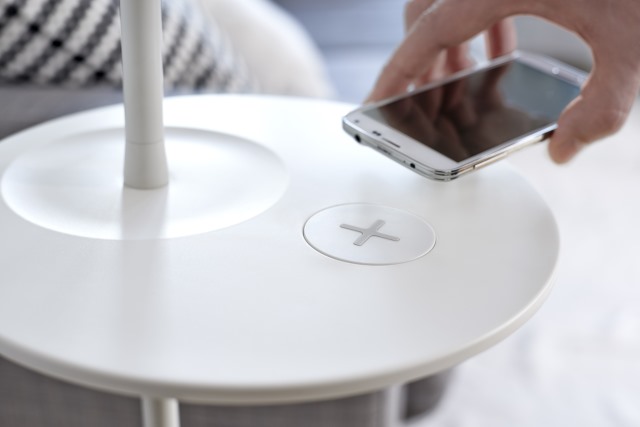
Starting in April, IKEA will start to sell furniture with integrated Qi wireless charging points. The Scandinavian flat-pack furniture store, famous for the likes of the BILLY bookcase, plans to launch a range of home furnishing in North America and Europe, before extending the rollout worldwide.


You might expect that sofas would be a natural home for a wireless charging -- just pop your smartphone on the arm so it can power up while you watch your favorite shows -- but in fact it is tables, desk and, surprisingly, lamps which will boast the feature. It's not just phones like the Galaxy Note 3 and Nexus 5 that can take advantage of wireless power, but also tablets like the Nexus 7.


The collection is called HOMESMART, and it hides wireless charging pads into everyday objects, eliminating the spaghetti wiring that plagues all too many homes. Coffee tables, desk lamps, and even floor lamps feature Qi pads, so there's no need to fumble for the end of a cable, just pop your phone down and start juicing up.


Jeanette Skjelmose, Business Area Manager Lighting and Wireless Charging, said:


Through research and home visits, we know that people hate cable mess. They worry about not finding the charger and running out of power. Our new innovative solutions, which integrate wireless charging into home furnishings, will make life at home simpler.


So the tangle of cables could become a thing of the past, but now all of the phones in a house will be fighting for space around a lamp or on a desk.


Photo credit: IKEA


from BetaNews http://feeds.betanews.com/~r/bn/~3/CQD4JXrVu_U/

via IFTTT

Windows 8.x still nowhere near as popular as Windows XP

New Windows shrug


It’s fair to say, Windows 8.x has enjoyed something of a rollercoaster ride when it comes to usage share. While it’s never been a popular operating system (quite the opposite in fact), share has gone up and down, with gains one month being wiped out by losses the following month.


NetMarketShare’s monthly usage share figures provide a decent guide as to how Microsoft’s tiled OS is doing, and it’s usually pretty interesting, although February was a fairly unexciting month.


Windows 8.1 went from 10.04 percent share to 10.49 percent, and Windows 8 went from 3.79 percent to 3.55 percent. In total 8.x gained 0.21 percentage points.


Windows 7 refuses to yield any ground and in February gained 0.07 percentage points, going from 55.92 percent to 55.99 percent. It remains by far and away the dominant operating system, and it’s Windows 7 users that Microsoft will need to target with Windows 10 as I suspect a large portion won’t upgrade to the new OS even if it is free.


Windows XP remains impressively resilient, and actually gains a modicum of usage share this month going from 18.93 percent to 19.15 percent.


All in all, February turned out to be a rather static month, with no real gains or losses to speak of which isn’t really surprising as anyone thinking of changing operating systems is likely now waiting for Windows 10 to arrive. Talking of which, the Technical Preview now has 0.08 percent share of the desktop OS market.


Image Credit: racorn/Shutterstock


from BetaNews http://feeds.betanews.com/~r/bn/~3/M5fEbXXc-fM/

via IFTTT