Source: Wearable Maker Fitbit Is In Talks To Buy Fitness App Startup FitStar


For the last several years, Fitbit has created hardware and software designed to help consumers keep track of their activity levels. But we’ve heard the wearable maker could soon acquire FitStar, a startup which makes apps that might help motivate Fitbit customers to actually be more active.


According to a source close to the matter, Fitbit is evaluating a purchase of FitStar for upwards of $25 to $40 million in a mix of cash and stock. A deal like this could always fall apart, of course, but if it goes through our source says the acquisition could close as early as next week.


Fitbit is one of the oldest and has some of the most popular activity trackers on the market. Founded in 2007, its devices accounted for approximately 50 percent of all wearable bands sold in 2013, according to one research report.


That said, the market has been flooded with a ton of new fitness tracking gadgets in the last year or two. Jawbone, Misfit, Mio, Basis, Garmin, and even Microsoft have released competing products. And that’s not even counting the upcoming Apple Watch, which the company reportedly expects to sell 5 million of during its initial run.


Fitbit’s hardware includes a variety of wristbands, clip-on activity trackers, and a connected scale. It also has mobile apps and an online dashboard through which customers can log their steps, weight, food intake, and other workout activities.


While Fitbit’s software provides an all-in-one platform for tracking all that data, it also recognizes not everyone will want to use its apps for all those functions. As a result, it’s partnered to share data with a number of third-party app makers, such as LoseIt!, MyFitnessPal, MapMyRun, Endomondo, and also FitStar.


Fitbit’s decision to pursue an acquisition of FitStar makes sense as the activity tracker market matures and more consumers are looking for practical applications that could help them get fit. That is, now that they have they data, what can they actually do with it?


FitStar makes a series of fitness and yoga apps that provide personalized workout programs for users. Those apps include high-quality video workouts led by celebrity fitness trainers to help motivate users to get in shape. Over time, its apps track the exercises users take part in and adapts to their strengths (and weaknesses).


The purchase has a number of benefits for each company. Beyond the obvious cross-pollination between Fitbit and FitStar user bases — i.e. Fitbit pushing its users to join FitStar and vice versa — an acquisition would give Fitbit an entree into the growing online fitness instruction market, while providing more resources for FitStar to continue producing instructional videos.


All of that is important as Fitbit pursues an IPO, which is reportedly planned for later this year. It would also make Fitbit’s platform a bit more defensible against “dumb trackers” that only provide analytics without actually helping users to get off the couch.


A small side benefit to this is an incremental revenue stream that would come from FitStar’s premium subscription user base and sales of individual workout programs on its apps.


Finally, the acquisition could be an integral part of Fitbit’s defense against the Apple Watch — a device which any number of fitness startups will soon begin making workout apps for. Fitbit is one of the few wearable manufacturers not to integrate with Apple’s HealthKit, due to competitive concerns around the release of the Apple Watch. We’ve heard that’s one reason why Fitbit devices were pulled from the Apple store late last year.


Representatives from Fitbit and FitStar did not respond to our request for comment.


from TechCrunch http://feedproxy.google.com/~r/Techcrunch/~3/tHR9r8s7zQM/

via IFTTT

Study: Most People Won’t Stop Online Bullies


In 1964 a woman named Kitty Genovese was stabbed and left for dead in Kew Gardens, Queens. She screamed for help over a half hour while bystanders and apartment-dwellers above apparently ignored her pleas. Her assailant had time to disguise himself during the attack. She died of her injuries, and experts at the time called the failure of bystanders to act “Genovese Syndrome.”


While the online world isn’t nearly as dire as Genovese’s tragedy, its clear from a recent OSU study that bystander syndrome that bears her name is still alive and well. The study watched 221 students as they interacted in a chat room. A bully would appear and berate other members of the group. According to the study, “only 10 percent of the students who noticed the abuse directly intervened, either by confronting the bully online or helping the victim.”


The bully and the victim were obviously part of the study and their goal was to get a reaction from the other people in the chat room.


“The results didn’t surprise me,” said Kelly Dillon, lead author of the study and a doctoral student at Ohio State. “Many other studies have shown bystanders are reluctant to get involved when they see bullying. The results disappointed me, as a human, but they didn’t surprise me as a scientist.”


According to the release, the bullying began three minutes into an online survey.


“We had the chat monitor say things like ‘How did you get into college if you can’t even take a survey?'” Dillon said. “Finally, after getting increasingly aggressive, the chat monitor tells the victim, ‘Figure it out yourself.'”


After three minutes had passed, the victim asked another question and the scripted abuse began again. In the script, the victim did not respond to the rudeness at all.


About 68 percent of participants said later that they noticed the cyberbullying in the chat window. Of the one in 10 who noticed the abuse and responded directly, more than half (58 percent) reprimanded the bully. One response, for example, was “How are you being helpful at all right now?” A quarter of those who responded insulted the bully, saying things like “I can smell the odor of loser from you.”


Was there an upside? Yes. After the study concluded, 70% of the participants reported or rated the bully in an anonymous review opportunity. This means that while participants didn’t stand up to the bully, they did try to prevent them from bullying again.


While this is cold comfort for the victims of online bullying, it’s clear that the medium does allow for some hope. Online bullying will become more and more common and it has real and often tragic effects. After the study, Dillon asked the participants what they thought.


“Many said they wanted to respond to the bullying, but weren’t sure what they should do,” she said. “We all do that occasionally. We’re all bystanders at some point.”


from TechCrunch http://feedproxy.google.com/~r/Techcrunch/~3/Uzd-mDter_I/

via IFTTT

Pebble Launches A Preview SDK With Color Support For The New Pebble Time


The Pebble Time is still going strong on Kickstarter, but Pebble is already thinking about the device’s launch in May, and is accordingly making tools available early to help both existing and new developers target the platform. A new developer preview of the Pebble SDK 3.0 is now available, and it includes a software emulator that shows you how your apps will look on the Pebble Time’s new full color e-paper display.


Apps built with the new software will work on both previous Pebbles and the new Pebble Time, and the company says that only minor changes are required in order to help devs add color to their existing applications. Resolution for the apps doesn’t change, but developers can now code in up to 64 colors, and there’s a new animation framework, plus support for both static and animated PNG.


  1. block-world


  2. isotime


  3. test7


  4. fill-up


It’s just a start, but it’s a signal that the startup is moving full steam ahead with its launch plans. The Kickstarter portion of this project isn’t your typical crowdfunding campaign – after selling Pebble successfully for over a year with more than 1 million devices shipped, Pebble should know exactly what it takes to deliver this product on time, and early access to dev tools is definitely part of that.


One thing that might be a challenge: Getting developers to focus on building Pebble apps when the Apple Watch launch is right around the corner.


from TechCrunch http://feedproxy.google.com/~r/Techcrunch/~3/CDIoJzlPhkE/

via IFTTT

3D Robotics Taps Qualcomm For $50M Series C And Mobile Tech


The race to build the best drone is on and 3D Robotics is today announcing its latest round of financing that it hopes will enable the company to keep its commanding position in the marketplace. As part of the funding, the drone upstart also found a new partner in Qualcomm. You know, the company that builds the chips and bits inside cell phones, because as CEO and co-founder Chris Anderson explained, the company’s drones are directly modeled after cell phones.


Qualcomm Ventures lead the $50 million Series C and also roped 3D Robotics into participating in the firm’s robotics initiative. The cash will be used to ramp up production of the firm’s upcoming consumer drone along with increasing development of its commercial products in light of the FAA’s recent ruling.


Anderson stated working with Qualcomm was a natural fit for 3D Robotics. The company designed its drones much like an Android cell phone. There are different so-called stacks to the hardware. Some of these stacks, like on Android, can be modified by the owner while others are locked. Since Qualcomm chips run most Android smartphones, the company’s chips fit well into 3D Robotics’ design scheme.


Plus the two companies are practically neighbors.


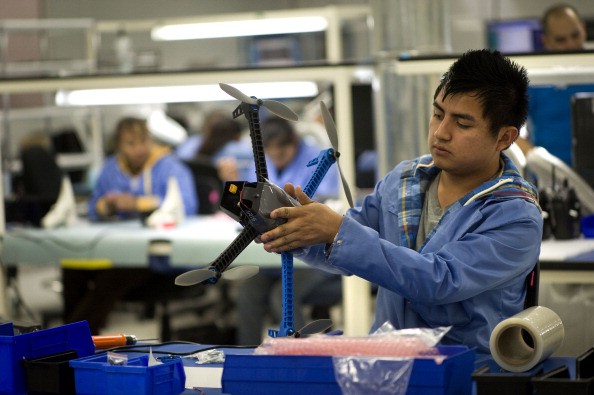
3D Robotics is based in Berkeley, California, but operate engineering facilities in San Diego, Qualcomm’s hometown. The drone maker’s manufacturing facility is just five minutes away across the boarder in Tijuana, Mexico. Company employees even has special boarder passes so they don’t have to stop at Customs.


3D Robotics plans to implement Qualcomm technologies in upcoming drones including the chip maker’s popular Snapdragon SoC. 3D Robotic’s consumer drone will use Qualcomm chips; none of the company’s current products use Qualcomm parts, though.


Along with Qualcomm Ventures, Foundry Group, True Ventures, OATV, Mayfield, Shea Ventures and additional investors also participated. This latest round is the largest single funding round of any U.S-based drone manufacturer to date, bringing 3D Robotics’ total amount raised to $85 million from three rounds and eight investors.


“True Ventures was the first investor in 3D Robotics when the company launched in 2012,” Jon Callaghan, founder of True Ventures, said to TechCrunch. “We shared Chris Anderson’s vision for the future of robotics and autonomous vehicles. 3DR is leading this next wave of the manufacturing revolution, using software, open source and networks to empower the hardware of tomorrow. We are thrilled to be a part of the 3DR team.”


Anderson laughed when I pointed out that the form 3D Robotics filed with the SEC showed the company set out to raise $40 million but ended up with $50 million. “This is just the first close,” he said, noting that the round was very oversubscribed and that more cash is on the way. It seems 3D Robotics is just getting started.


  1. 3D Robotics IRIS+ Propeller CU


  2. 3D Robotics IRIS+ GoPro CU


  3. 3D Robotics IRIS+ 03


  4. 3D Robotics IRIS+ 02


  5. 3D Robotics IRIS+ 01


from TechCrunch http://feedproxy.google.com/~r/Techcrunch/~3/ofmjtGLShe4/

via IFTTT

3D Robotics Taps Qualcomm For $50m Series C And Mobile Tech


The race to build the best drone is on and 3D Robotics is today announcing its latest round of financing that it hopes will enable the company to keep its commanding position in the marketplace. As part of the funding, the drone upstart also found a new partner in Qualcomm. You know, the company that builds the chips and bits inside cell phones, because as CEO and co-founder Chris Anderson explained, the company’s drones are directly modeled after cell phones.


Qualcomm Ventures lead the $50 million Series C and also roped 3D Robotics into participating in the firm’s robotics initiative. The cash will be used to ramp up production of the firm’s upcoming consumer drone along with increasing development of its commercial products in light of the FAA’s recent ruling.


Anderson stated working with Qualcomm was a natural fit for 3D Robotics. The company designed its drones much like an Android cell phone. There are different so-called stacks to the hardware. Some of these stacks, like on Android, can be modified by the owner while others are locked. Since Qualcomm chips run most Android smartphones, the company’s chips fit well into 3D Robotics’ design scheme.


Plus the two companies are practically neighbors.


3D Robotics is based in Berkeley, California, but operate engineering facilities in San Diego, Qualcomm’s hometown. The drone maker’s manufacturing facility is just five minutes away across the boarder in Tijuana, Mexico. Company employees even has special boarder passes so they don’t have to stop at Customs.


3D Robotics plans to implement Qualcomm technologies in upcoming drones including the chip maker’s popular Snapdragon SoC. 3D Robotic’s consumer drone will use Qualcomm chips; none of the company’s current products use Qualcomm parts, though.


Along with Qualcomm Ventures, Foundry Group, True Ventures, OATV, Mayfield, Shea Ventures and additional investors also participated. This latest round is the largest single funding round of any U.S-based drone manufacturer to date, bringing 3D Robotics’ total amount raised to $85 million from three rounds and eight investors.


“True Ventures was the first investor in 3D Robotics when the company launched in 2012,” Jon Callaghan, founder of True Ventures, said to TechCrunch. “We shared Chris Anderson’s vision for the future of robotics and autonomous vehicles. 3DR is leading this next wave of the manufacturing revolution, using software, open source and networks to empower the hardware of tomorrow. We are thrilled to be a part of the 3DR team.”


Anderson laughed when I pointed out that the form 3D Robotics filed with the SEC showed the company set out to raise $40 million but ended up with $50 million. “This is just the first close,” he said, noting that the round was very oversubscribed and that more cash is on the way. It seems 3D Robotics is just getting started.


  1. 3D Robotics IRIS+ Propeller CU


  2. 3D Robotics IRIS+ GoPro CU


  3. 3D Robotics IRIS+ 03


  4. 3D Robotics IRIS+ 02


  5. 3D Robotics IRIS+ 01


from TechCrunch http://feedproxy.google.com/~r/Techcrunch/~3/ofmjtGLShe4/

via IFTTT

FCC votes in favor of Net Neutrality... just

FCC votes in favor of Net Neutrality... just


The Net Neutrality debate has been rumbling on for quite some time now, but today something of a milestone has been reached. After the campaign gained the support of President Obama, Twitter, and many others, today was the Federal Communications Commission vote on a number of proposals put forward by chairman Tom Wheeler.


It is a victory for Net Neutrality and a great step towards ensuring that the internet remain open and free from controls by companies or government. The policy states, among other things, that ISPs may not charge for prioritization of web traffic. The vote was far from being a landslide. Two Republicans opposed to the policy changes kept the result to a 3-2 vote in favor of the proposals.


While the ban on paid prioritization has been the main focus of much of the net neutrality campaign, it is not the full story. The newly approved rules mean that broadband connectivity will be reclassified as a telecommunications service, introducing greater regulation, and there would be greater control of paid deals between content providers and broadband companies.


As well as being blocked from creating a two-tier internet where certain types of traffic is given greater priority over others, broadband providers would not be permitted to accelerate or block connections for a fee. The definition of broadband has been opened up, so the proposals will apply to mobile providers as well as to companies providing connection through landlines, fiber and the like.


The vote was well-received across the tech industry, and CEO of Xirrus Wi-Fi, Shane Buckey said:


The FCC's decision on net neutrality further validates its goal to provide more affordable and distributed Wi-Fi to the U.S. This foundational step supports IT infrastructure investment to provide more reliable Internet connectivity and improved quality of service for their users regardless of the internet service provider.


But not everyone is happy. The US Telecommunications Industry Association is planning legal action against the changes and Verizon denigrated the vote as "misguided", adding:


Today's decision by the FCC to encumber broadband internet services with badly antiquated regulations is a radical step that presages a time of uncertainty for consumers, innovators and investors.


Opponents of net neutrality have been left licking their wounds but, even in light of the vote, it's unlikely that we have heard the end of this debate yet. Nevertheless, history has been made.


Photo credit: mindscanner / Shutterstock


from BetaNews http://feeds.betanews.com/~r/bn/~3/YeT9nj9k5cA/

via IFTTT

YC-Backed Booktrope Rethinks Book Publishing


If you’re a writer, you’ve probably heard horror stories about the publishing industry — books that are rejected by publisher after publisher, books that sit in submission piles for years, books that are published but basically disappear without publisher support.


At the same time, self-publishing has its risks for authors, too. You could end up paying a lot of your own money to an editor and/or a designer, and if you don’t, you could end up with a poorly edited book and a lame cover that looks, well, self-published.


So Booktrope, part of the current class of startups at Y Combinator, is taking a different approach — on one level, Booktrope is a publisher itself, but one that allows authors to go around the gatekeepers of traditional publishing while still working with a professional team.


Chief Marketing Officer Katherine Sears said that she and her co-founders don’t come from the publishing world, which she argued is a good thing: “We’re coming at this from an unbiased and fresh perspective, but all of us have a passion and a love for books.”


Now, as someone who’s published a book with a small press, and who’s met a number of smart publishing pros, that statement isn’t entirely reassuring — are these people who don’t understand the industry they’re trying to fix? But talking to Sears, CEO Ken Shear (father of TwitchTV co-founder Emmett Shear), and CTO Andy Roberts convinced me they may not come from the publishing industry, but they’re plenty knowledgeable about it — and they’ve also thought through the details of their model.


So if you’re a writer who wants to publish a book, you go on Booktrope and provide information about yourself and your work. Sears said Booktrope doesn’t accept every author, with a selection process mixing automation and human judgment.


However, the company is less focused on assessing literary quality and more on making sure an author will be a good fit for the Booktrope platform. After all, there are plenty of poorly written, badly reviewed books that still sell incredibly well and find a devoted audience.


“I really feel like literary snobbery is not what the public needs,” Sears added.


To be clear, she’s not saying that every title will be a huge success, but Booktrope’s approach is all about letting readers, rather than editors, provide that filter.


Booktrope screenshot


Anyway, if you’re accepted into the system, you then post your completed manuscript on Booktrope and try to attract a team of editors, designers, and marketers, who can then collaborate through Booktrope’s online tools. Authors aren’t paying other team members directly, but offering them a share of the royalties. That means the author doesn’t have to pay out of their own pocket for these services, and the team members will have an incentive for the book to do well.


Booktrope distributes both digital and print-on-demand copies of the books through a number of the standard channels, including Amazon, brick-and-mortar bookstores, and subscription e-book services like Scribd. Many of those books come from authors who’ve tried self-publishing but weren’t happy with the results, Sears said, while most of the other team members come from the freelance side of the publishing world.


The company takes 30 percent of profits while the team gets the remaining 70 percent, split in whatever proportions they’ve negotiated. (Shear also emphasized that when the company calculates profit and royalties for each title, it’s not including general company overhead, just production costs for a specific book.)


Sears and Shear said they’ve been working on Booktrope for the past three years, but they argued their real launch came later, after Roberts joined and built out the technology. Since then, they’ve published nearly 400 titles and distributed 2.5 million copies of those books.


Featured Image: Brenda Clarke/Flickr UNDER A CC BY 2.0 LICENSE


from TechCrunch http://feedproxy.google.com/~r/Techcrunch/~3/DiBbTO5gq44/

via IFTTT